
3D Printing Training (RPT – Rapid Prototyping Technology)
Introduction to 3D Printing
3D Printing, also known as Additive Manufacturing (AM), is the process of building parts layer by layer directly from a digital 3D CAD model. It has revolutionized product design, prototyping, tooling, and manufacturing across industries such as automotive, aerospace, healthcare, architecture, consumer products, and education.
RPT (Rapid Prototyping Technology) enables engineers to quickly transform an idea into a functional prototype, reducing product development time and cost.
Why Learn 3D Printing (RPT)?
- Faster Prototyping: Quickly test and validate designs.
- Cost-Effective: Eliminates expensive tooling for prototypes.
- Customization: Enables personalized products (e.g., medical implants, jewelry).
- Complex Designs: Produces geometries impossible with traditional methods.
- Industry Demand: Growing requirement for 3D Printing specialists in design & manufacturing sectors.
Training Modules
🔹 Module 1: Fundamentals of 3D Printing
- History and evolution of Rapid Prototyping.
- Introduction to Additive Manufacturing vs Subtractive Manufacturing.
- Applications across industries.
- Workflow: CAD Model → STL Conversion → Slicing → Printing → Post-processing.
🔹 Module 2: 3D Printing Technologies
- FDM (Fused Deposition Modeling): Most common, low-cost plastic printing.
- SLA (Stereolithography): High-precision resin-based printing.
- SLS (Selective Laser Sintering): Powder-based for nylon and composites.
- DMLS/SLM (Direct Metal Laser Sintering/Selective Laser Melting): For metals like steel, titanium, aluminum.
- PolyJet / MultiJet Printing: Multi-material & multi-color printing.
- Binder Jetting & Hybrid AM.
🔹 Module 3: 3D Printing Materials
- Plastics (PLA, ABS, PETG, Nylon, TPU, Resins).
- Metals (Titanium, Stainless Steel, Aluminum, Cobalt-Chrome).
- Composites (Carbon Fiber, Glass Fiber, Kevlar).
- Biocompatible & food-safe materials.
🔹 Module 4: CAD for 3D Printing
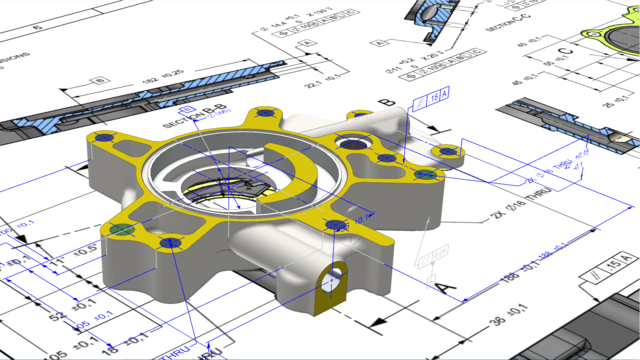
- Preparing 3D models in CAD software (SolidWorks, NX, CATIA, Fusion 360).
- Exporting & fixing STL files.
- Use of slicing software (Cura, PrusaSlicer, Simplify3D).
🔹 Module 5: 3D Printing Hands-on Training
- Printer setup, calibration, and operation.
- Slicing strategies: layer height, infill, supports.
- Printing prototypes in FDM & SLA machines.
- Troubleshooting common issues (warping, stringing, layer shifting).
🔹 Module 6: Post-Processing Techniques
- Part removal and surface finishing.
- Sanding, vapor smoothing, and painting.
- Resin curing and support removal.
- Heat treatments and machining for metal parts.
🔹 Module 7: Advanced Applications of RPT
- Rapid Tooling (injection mold inserts, jigs & fixtures).
- Medical applications (prosthetics, dental implants, surgical models).
- Aerospace & automotive lightweight parts.
- Architecture & construction (3D printed buildings).
Software & Tools Covered
- CAD Software: SolidWorks, NX, CATIA, Fusion 360.
- Slicing Software: Cura, Simplify3D, PrusaSlicer, ChiTuBox.
- Simulation Tools for printability & stress analysis.
Learning Outcomes
After completing this training, you will:
✅ Understand different 3D Printing technologies and their industrial applications.
✅ Operate and troubleshoot 3D printers (FDM, SLA, SLS).
✅ Select suitable materials based on application.
✅ Convert CAD designs into functional prototypes.
✅ Apply post-processing for professional-quality parts.
✅ Work on real-world projects in automotive, medical, aerospace, or product design.
Career Opportunities
- 3D Printing Engineer / Specialist
- Rapid Prototyping Engineer
- Product Development Engineer
- Additive Manufacturing Technician
- Medical 3D Printing Expert
- R&D Engineer (AM Division)
Industries Hiring: Automotive, Aerospace, Medical, Tool & Die, Consumer Goods, Architecture, Robotics, Defense.
✨ 3D Printing Training (RPT) empowers you to turn imagination into reality – from digital design to physical product – bridging innovation and manufacturing.